Kingdom of Cilicia (part 2)
Hetum I and the Mongols

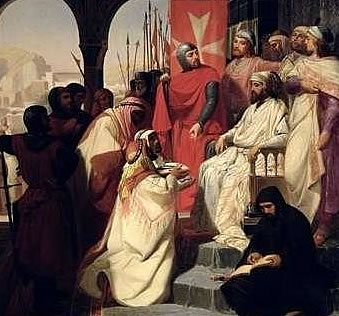
Meanwhile, the vast Mongol Empire continued its expansion in the East, gradually pushing the Turks out of Greater Armenia, Syria, and Mesopotamia. During the reign of Hetum I, Mongol forces advanced toward the borders of Cappadocia and Cilicia. A far-sighted statesman, Hetum I quickly recognized the significance of the new power and sought amicable relations with Khan Batu.
Later, when Khan Mangu assumed the title of Great Khan, Hetum I undertook a long and perilous journey to the Golden Horde, bringing magnificent gifts. His diplomacy proved successful, and the military alliance with the Mongols was reaffirmed. The Mongols supported Hetum I in his struggles against the Sultans of Konya and Aleppo. Subsequent Armenian kings likewise maintained friendly ties with the Khans of the Golden Horde.
However, circumstances changed dramatically as Mongol power declined and many Mongol leaders gradually converted to Islam, altering the balance of alliances in the region.
Cilician Kingdom in danger
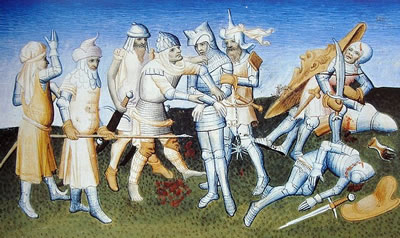
In 1266, the Mamluk Sultan Beibars demanded that Hetum I break his alliance with the Mongols and accept Mamluk territorial claims. When he refused, the Mamluks invaded Cilicia. On August 24, 1266, the Battle of Mari—later known as the Disaster of Mari—took place. Armenian forces, led by two of the king’s sons, Levon (the future Levon II) and Thoros, were defeated. Levon was captured, and Thoros was killed in battle.
To secure his son’s release, Hetum I paid an enormous ransom and ceded significant territories to the Mamluks. Three years later, he abdicated in favor of his son, took monastic vows, and died in a monastery.
By the early 14th century, increasingly powerful and aggressive Mamluk dynasties threatened the survival of the Cilician Armenian Kingdom. Armenian kings were left with no choice but to seek protection from European monarchs. Levon III sent envoys to Rome, promising church union between the Armenian and Catholic Churches. His brother Oshin I attempted to form an alliance with Philip V of France. Later, Levon IV, Oshin’s son, also appealed to Philip VI for assistance. Though sympathetic, European rulers offered no effective support.
End of the Rubenids
Levon IV was the last king of the Rubenid dynasty. After his death, the Armenian branch of the royal Lusignan family inherited the throne of Cilicia. John Lusignan, who ruled under the name Constantine III, attempted to impose Catholicism throughout the kingdom and brought numerous European knights to his court.
But the kingdom was already exhausted by constant Muslim invasions. In reality, Christian Cilicia was doomed. Surrounding Muslim states, fearing new Crusades, viewed Christian Armenia as a potential catalyst for Western intervention and a constant source of political tension.
Fall of the Kingdom
Under Constantine IV, the Armenians of Cilicia achieved what would be one of their final victories, defeating Mamluk forces near Alexandria. After his death in 1364, the throne remained vacant for over two years. Finally, in 1366, Levon V was elected king—the last Armenian monarch.
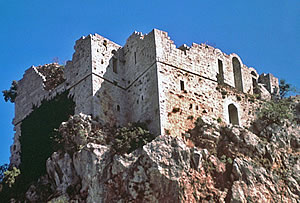
Eight years later, after suffering a series of disastrous defeats against superior Mamluk forces, Levon V retreated to the fortress of Kapan but was soon compelled to surrender. The Mamluks imprisoned him in Egypt, where he remained for several years until the King of Castile intervened on his behalf.
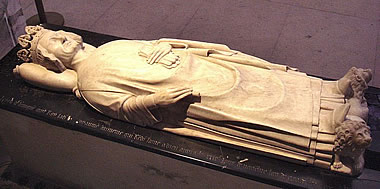
Levon V spent the rest of his life in exile and died in Paris in 1393.