Between Persia and Rome
The Persian dominance
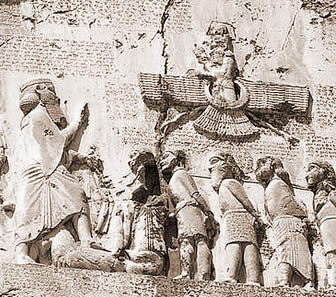
In 612 BC, the Medes destroyed Nineveh, bringing the Assyrian Empire to an end. Armenia’s ancient adversary vanished from the political stage. About fifty years later, King Tigranes I, in alliance with Cyrus the Great of Persia’s Achaemenid dynasty, conquered the lands formerly under Median rule and strengthened the Armenian kingdom.
Tigranes I had three sons, the youngest being Vahagn the Dragonfighter. Armenian pagan tradition enveloped Vahagn in glory—he was deified and revered much like Hercules. Yet Armenia’s era of stability soon faded as weak rulers followed, and the kingdom eventually became tributary to Persia.
A famous cuneiform inscription, the Behistun Stone (c. 520 BC), lists Armenia among the lands ruled by Darius I. The native dynasty of Hayk came to an end; Armenian kings were henceforth appointed or confirmed by the Persian monarchs. Armenian troops fought in Persia’s major campaigns for centuries. The famed Armenian cavalry earned renown for its valor.
Vahe, the last descendant of the dynasty of Hayk, died in 331 BC fighting for Darius III against Alexander the Great.
Armenia regains independence
Armenia regained its independence after the death of Alexander the Great, when his empire fragmented. By 190 BC, Prince Artashes, governor of Greater Armenia, reunified the scattered Armenian lands and founded the Atashesian dynasty. He built the city of Artashat—a project some Roman historians claim was guided by Hannibal the Carthaginian, then a refugee from Rome.
Under King Vagharshak (149 BC), Armenia entered a prosperous era. He established the institute of nobility and reorganized the state administration. Armavir became his royal residence. Greek inscriptions found there attest to the strong Hellenistic influence on Armenian culture at the time.
Tigranes the Great
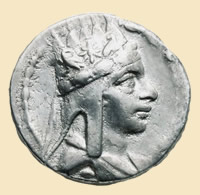
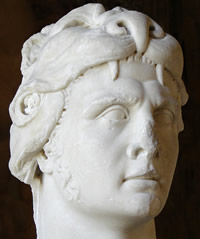
Following the successful reigns of Arshak and Artashes, their descendant Tigranes II—known as Tigranes the Great—ascended the throne in 95 BC. Ally and brother-in-law of Mithridates of Pontus, he fought Rome at the height of its expansion.
Under Tigranes II, Armenia reached its greatest territorial extent—from the Caspian Sea to the borders of Egypt. He subdued Syria, Cappadocia, and Mesopotamia, and even conquered Palestine, deporting thousands of captives. He united all Armenian lands and founded four major cities named Tigranakert in different parts of his empire.
Like his father Artashes, he brought numerous Greek statues and artistic treasures to Armenia. A colossal statue of Zeus stood in the fortress of Ani, and a grand sanctuary to the goddess Anahit rose in Ashtishat.
Roman and Parthian invasions
Tigranes’ empire faced its downfall as Rome and Parthia advanced. In 69 BC, Lucullus invaded and besieged Tigranakert. The city fell after betrayal by its Greek garrison, and the Romans burned it to the ground, destroying temples, statues, and its magnificent theater.
Meanwhile, Parthia attacked Artashat, led by the treacherous son of Tigranes, who defected after marrying a Parthian princess. Despite fighting on two fronts, Tigranes defeated the Parthian army, and Lucullus ultimately withdrew under Armenian counterattacks.
But Rome soon launched a second campaign under Pompey the Great. At age 75, Tigranes was forced to negotiate. He surrendered some territories but retained his throne and much of his power.
Artavazd
Upon Tigranes’ death in 55 BC, his son Artavazd ascended the throne. A devoted admirer of Greek culture, he authored plays and poems in Greek, and staged Hellenistic tragedies at his court in Artashat.
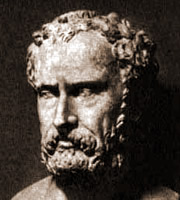
According to ancient sources, when the severed head and right hand of Roman commander Crassus—killed in battle against the joint Armenian-Persian forces—were brought to Artavazd, he was watching Euripides’ Bacchae.
His reign, however, proved unfortunate. He lost many lands his father had conquered. Captured by Marcus Antonius, Artavazd was taken in chains to Egypt as a gift for Cleopatra. Proud and unyielding, he refused to bow to her and was executed. Armenia fell under Roman vassalage.
Abgar and the First Baptism
Under King Abgar, nephew of Tigranes the Great, Armenia came fully under Roman authority. Roman officials conducted a census and erected numerous statues of Emperor Augustus. Later, planning a revolt, Abgar relocated to Mesopotamia, founded the city of Edessa, and transferred there the royal court, treasury, and archives. Thus Armenian sources call him King of Armenia, while Greco-Roman sources refer to him as ruler of Edessa.
Hearing of the miracles of Jesus in Galilee, the ailing Abgar came to believe in Him and sent a letter requesting healing. Armenian tradition holds that Abgar’s envoys met Jesus in Jerusalem. Jesus replied in writing but declined to travel.
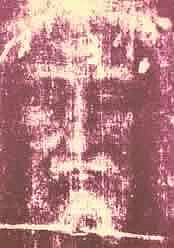
After the Ascension, the Apostle Thaddaeus traveled to Edessa, bringing with him a sacred cloth—identified by some as the Shroud of Turin. According to Moses Khorenatsi, Abgar and the entire city were baptized, marking the first recorded Christianization of a ruler and his people.