History of Karabakh (part 4)
Independence of the NKR proclaimed

Facing imminent Azerbaijani aggression and the approaching collapse of the Soviet Union, Armenian leaders in Artsakh recognized the urgent need to establish independent statehood. Although the population overwhelmingly wished to unify with Armenia, proclaiming independence was viewed as the only viable means of ensuring the security and survival of the people.
On September 2, 1991, a joint session of deputies from Nagorno-Karabakh and the Shahumian region voted to declare the Nagorno-Karabakh Republic (NKR) an independent state.
On December 10, 1991, an internationally monitored referendum was held: the overwhelming majority of Armenians in Nagorno-Karabakh and Shahumian voted for independence.
On January 6, 1992, the NKR was formally proclaimed, and the following day Arthur Mkrtichyan was elected Chairman of its Parliament.
Azerbaijan begins military actions
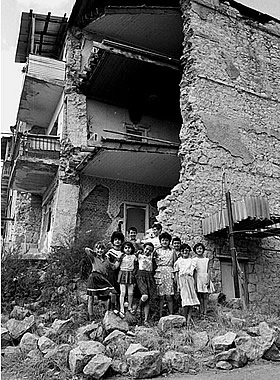
Beginning in December 1991, Azerbaijani forces launched full-scale military operations against Artsakh. The predominantly Azeri-populated strongholds—especially Shushi and Hodjallu—were transformed into fortified bases equipped with artillery and rocket launchers. These positions unleashed relentless bombardments on Stepanakert and surrounding Armenian villages.
Azerbaijan employed “Grad” rockets—munitions banned by numerous international conventions as weapons of mass destruction. Residents of Stepanakert lived under constant shelling, taking refuge in basements. Even hospitals and maternity wards were forced underground.
First Armenian victories
In early 1992, Azerbaijani forces—superior in manpower, tanks, and weaponry—launched a massive offensive. During the initial stages, the defense depended heavily on small units of Armenian volunteers known as Fedayi, who heroically protected border villages.
As the scale of Azerbaijani attacks intensified, the necessity of centralizing the Armenian forces became clear. In January 1992, a unified military Headquarters was established to coordinate the defense of Artsakh.
Within weeks, Armenians achieved their first meaningful victories, liberating the villages of Kirkijan, Malibeyli, and Ghushchilar, which were crucial to the defense of Stepanakert.
Liberation of Khodjalu, Shushi and Lachin
Once the Azerbaijani positions threatening Stepanakert were neutralized, the next strategic objective was Khodjalu—where Azerbaijan had amassed significant troops, heavy equipment, and controlled the only airport.
On February 25–26, 1992, Armenian forces encircled the village and offered safe passage to civilians through a designated humanitarian corridor. Azerbaijani commanders rejected the offer and continued military operations, using civilians as shields.
Khodjalu was liberated on February 26, enabling the airport to function again.
However, the city of Shushi—towering over Stepanakert and transformed into a colossal fortress—continued to bombard Armenian areas day and night. The destruction and civilian casualties made its liberation an urgent military necessity.
Because of its formidable cliffs and natural defenses, Shushi was long considered an impregnable stronghold. The old proverb captured this truth: “Who controls Shushi, controls Karabakh.”
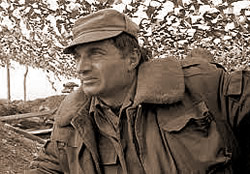 Arkady Ter-Tadevossian, nicknamed Commando, during the Shushi operation, in May 1992.
The assault on Shushi began on May 8, 1992. Forces under Arkady Ter-Tadevossian first secured the vital Shushi–Lachin road. A decisive attack from the northeast broke the Azerbaijani defensive lines, and after intense street battles, the city was liberated on May 9.
The momentum continued. Armenian forces pushed westward and southward along the Shushi–Lachin–Zabuh corridor, and on May 18, they liberated Lachin.
This victory ended the three-year blockade and created the crucial land bridge—later known as the Lachin Corridor—connecting Armenia with the NKR.
Elshibey launches new offensive
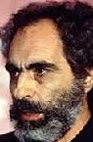 Abulfaz Elchibey Azerbaijan quickly prepared a massive counter-offensive. Abulfaz Elchibey, newly elected president and leader of the Popular Front, declared the rapid conquest of Karabakh his chief objective. The Azerbaijani leadership struck deals with commanders of the former Soviet 23rd Division of the 4th Army, gaining access to tanks and other heavy weapons.
 Shahen Meghrian, commander of the defense forces of the Shaumian region.
On June 12, 1992, Azerbaijani infantry, heavily supported by Russian armored units, launched an unprecedented attack on the Shahumian region. Within days, Azerbaijani forces captured Shahumian and occupied most of Mardakert.
More than 40,000 Armenian refugees fled to Stepanakert, while small detachments under Shahen Meghryan continued resistance, infiltrating occupied zones to wage guerrilla warfare.
Half of Karabakh under Azeri occupation
The situation grew dire. As Azerbaijani forces pressed their advantage, the NKR Parliament declared a state of emergency. The crisis intensified after Armenian defenders were forced to retreat from Mardakert and Aterk on July 5, 1992. The entire Mardakert region became a vast battlefield.
Simultaneously, Azerbaijani units launched attacks in the Askeran, Martouni, and Hadrout regions, threatening to overrun the remaining Armenian-controlled territory.
By August 12, nearly half of Nagorno-Karabakh had fallen under Azerbaijan’s occupation. In response, the NKR Parliament declared martial law and ordered the mobilization of all men aged 18 to 45.
On August 15, the State Defense Committee of the NKR was created. Robert Kocharyan was appointed Chairman and granted emergency executive powers, marking a decisive step toward reorganizing and strengthening the Armenian war effort.