Independence
Massacres in Baku
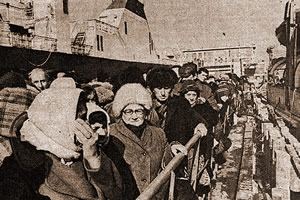 The Armenian refugees from Baku evacuated to Krasnovodsk, Turkmenistan, in January, 1990
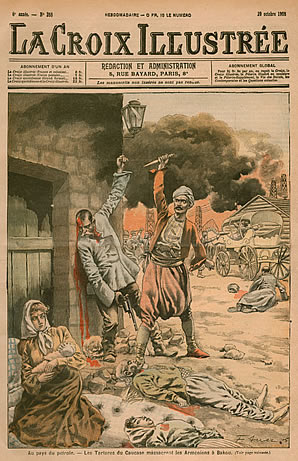
In January 1990, the Azerbaijani capital of Baku descended into chaos and anarchy. Extremists from the Popular Front of Azerbaijan effectively seized power, openly calling for the extermination or expulsion of Armenians. Beginning on January 10, mass pogroms broke out. Hundreds of Armenians were murdered—shot, burned alive, raped, or tortured with unimaginable brutality.
Hundreds of thousands fled, seeking refuge in Armenia.
The Sovereignty of Armenia proclaimed
As the Soviet Union continued to unravel, several republics began proclaiming sovereignty. Armenia followed suit, declaring the supremacy of its own constitution over that of the USSR.
Levon Ter-Petrossian—a member of the Karabakh Committee and leader of the Armenian National Movement (ANM)—was elected Chairman of the Armenian Supreme Council.
Massacres and deportations in Karabakh
In the spring of 1991, joint Azerbaijani and Soviet Interior Ministry forces launched Operation Ring, targeting Armenian-populated villages in the Shahumian, Khanlar, and Shushi districts. Under the pretext of “passport checks,” forces carried out mass robbery, violence, and killings. Approximately 100 Armenians were murdered during the deportation of 24 Armenian villages.
Despite repeated protests by the Armenian government, the purges continued with increasing brutality.
By the summer of 1991, the leaders of Artsakh appealed to the United Nations to prevent the physical annihilation of the Armenian population. At the same time, recognizing the collapse of Soviet authority, Artsakh’s leaders began laying the foundations of a sovereign state. In early September 1991, they issued a declaration proclaiming the establishment of the Nagorno-Karabakh Republic (NKR).
Referendum in Armenia
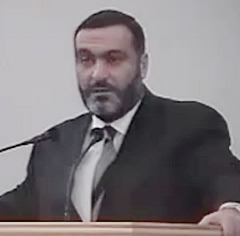
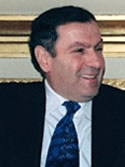 Levon Ter-Petrossian
The Soviet Union effectively collapsed after the failed coup attempt in Moscow in August 1991. On September 21, 1991, Armenia held a national referendum, in which an overwhelming majority voted for independence. After seventy years of Soviet rule, Armenia became an independent state.
In October 1991, Levon Ter-Petrossian was elected the first President of independent Armenia.
Referendum in Karabakh
Meanwhile, the situation in Artsakh deteriorated. Azerbaijan began heavy bombardment of Armenian towns and villages. Azerbaijani-populated settlements and the city of Shushi were transformed into military strongholds. After the dissolution of the USSR, Soviet military units withdrew, leaving Azerbaijan in possession of massive stockpiles of weaponry.
On December 10, 1991, 98% of the people of Artsakh voted for the independence of the Nagorno-Karabakh Republic in a referendum monitored by international observers and human rights groups.
Azerbaijan responded with intense bombardment of Stepanakert, using deadly “Grad” missiles—munitions banned by international conventions. Azerbaijani forces launched a large-scale offensive against the newly declared republic.
(A detailed account of the war continues in History of Artsakh, part 3
Truce
A ceasefire took effect in May 1994, but no meaningful progress toward a negotiated peace has been achieved. Azerbaijan continues to appeal to the international community, leveraging its oil reserves, while Armenia maintains that any settlement must be approved by the Nagorno-Karabakh Republic itself. NKR remains firm in its pursuit of full independence.
Kocharyan becomes President of Armenia
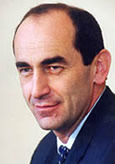
In March 1997, President Ter-Petrossian appointed Robert Kocharyan—then President of the Nagorno-Karabakh Republic—as Prime Minister of Armenia. Kocharyan made fighting corruption and tax evasion key priorities.
In Artsakh, presidential elections resulted in Arkady Ghukassian, former NKR Foreign Minister, becoming President.
In February 1998, a major disagreement over the Karabakh issue led Ter-Petrossian to resign. In March 1998, Robert Kocharyan was elected President of Armenia.
On October 27, 1999, a shocking terrorist attack in the Armenian Parliament resulted in the murders of Prime Minister Vazgen Sargsyan and Speaker Karen Demirchyan. Despite nationwide shock, Kocharyan managed to retain political stability.
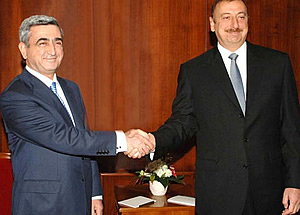
Kocharyan was reelected in 2003, defeating Stepan Demirchyan in the second round. He continued negotiating with Azerbaijani President Ilham Aliyev on the status of Nagorno-Karabakh, with talks in Astana (Kazakhstan), Rambouillet (France), Minsk, and Moscow—none of which produced results.
Serge Sargsian
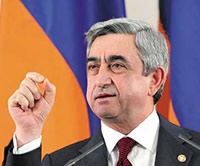 Serge Sargsian
New presidential elections were held in February 2008. Serge Sargsian, former Prime Minister, won with 53% of the vote. Former President Levon Ter-Petrossian, who received 21.5%, accused the government of electoral fraud and declared himself the rightful victor.
Mass protests erupted in Yerevan and lasted for 10 days. On March 1, violence broke out when police attempted to disperse demonstrators, reportedly after receiving information about firearms in the camp. Ten people were killed, and a state of emergency was declared by President Kocharyan. Sargsian was ultimately recognized as the legitimate President.