MIATSUM!
Armenians support Perestroika
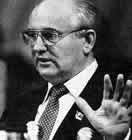
In 1985–1986, Soviet leader Mikhail Gorbachev launched a sweeping reform campaign—perestroika and glasnost—aimed at revitalizing the collapsing Soviet system. Armenians overwhelmingly welcomed these reforms, hoping they would finally bring justice and national self-determination.
In late 1987, the Armenians of Nagorno-Karabakh collected more than 80,000 signatures in a petition to the Soviet government, demanding the region’s secession from Soviet Azerbaijan and its reunification with Armenia—a movement known in Armenian as Miatsum (Unification). After decades of oppression under Azerbaijani rule, the Armenians of Artsakh believed the moment had come to restore historical justice.
Simultaneously, an unprecedented wave of support rose in Armenia. Mass meetings, peaceful demonstrations, and general strikes alarmed Soviet authorities. The Armenian movement, both in Artsakh and Yerevan, remained peaceful, disciplined, and democratic.
Perestroika faced its first major test—and failed. To Armenia’s deep disappointment, the Kremlin adopted a “wait-and-see” posture before ultimately siding with Azerbaijan, proclaiming that “the map of the USSR will never be redrawn.”
Azeri atrocities in Sumgait
On February 26–28, 1988, Azerbaijan responded in a brutal and familiar fashion. Mass pogroms were carried out in the city of Sumgait near Baku. Hundreds of innocent Armenians—elderly people, women, children—were attacked in their homes by fanatical Azeri mobs. Many were beaten, raped, tortured, burned alive, or killed in the streets.
For three days, Sumgait descended into complete anarchy. The pogroms were orchestrated and guided by members of the local Azerbaijani government. Armenian homes were ransacked and destroyed.
The Karabakh Committee
The peaceful rallies and demonstrations in Armenia were organized by a group of intellectuals who became known as the Karabakh Committee. Initially focused on defending the constitutional rights of Armenians in Artsakh, the movement evolved into a broad, nationwide struggle for national liberation.
By late 1988, the Karabakh Committee had become a powerful political force, enjoying overwhelming public support.
Pogroms in Kirovabad
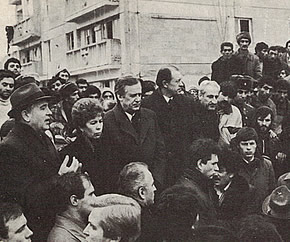
In late November 1988, as tensions escalated and new pogroms threatened Armenians in Azerbaijan, mass rallies and strikes resumed across Armenia. Thousands of Armenian refugees fled Azerbaijan and sought shelter in Armenia.
In Kirovabad (Ganja), the second-largest Azerbaijani city, horrific atrocities were committed. Armed Azerbaijani gangs stormed a nursing home and murdered elderly Armenian residents.
In response, the Soviet government—following its standard policy of “parity”—declared martial law in both violent Azerbaijan and relatively peaceful Armenia.
December 7, 1988
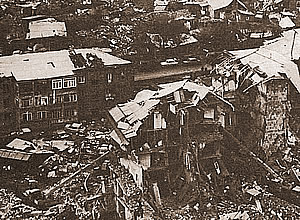
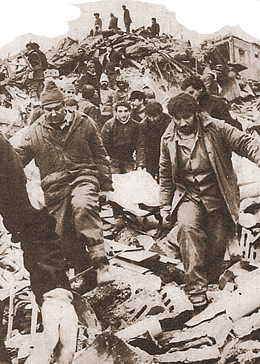 Rescue works in Leninakan (present day Guymri) in December 1988
On December 7, 1988, Armenia suffered a new national tragedy. A devastating earthquake struck the northern regions, killing at least 25,000 and leaving half a million homeless. Around the world, countries launched an unprecedented relief effort—directly to Armenia, not through Moscow—symbolizing the fading of the Iron Curtain.
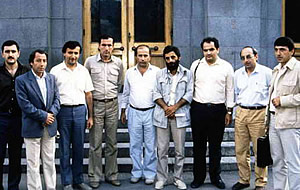
Amidst national mourning, Moscow attempted to crush the Karabakh movement. The members of the Karabakh Committee were arrested and taken to Moscow. Six months later they were released and returned to Armenia in triumph, immediately forming the Armenian Pan-National Movement (APNM). In the summer of 1989, four APNM members were elected to the Armenian Parliament.
The Azeri blockade of Armenia and Karabakh
In early 1989, Azerbaijan imposed a severe economic blockade on both Armenia and Artsakh. Fuel shortages became catastrophic. The Metsamor nuclear power plant—the only nuclear facility in Transcaucasia—was shut down, dramatically worsening the energy crisis. Food supplies dwindled.
The situation grew increasingly dire in Artsakh. In November 1989, the USSR Supreme Soviet abolished the Special Administration Committee of Nagorno-Karabakh, which had placed the region under direct Moscow authority. In its place, the Kremlin created the “Organizational Committee,” returning the region to Azerbaijani jurisdiction.
On December 1, 1989, the parliaments of Armenia and Nagorno-Karabakh jointly proclaimed reunification. Azerbaijan erupted in violent unrest in response.